
AI-Driven Porphyry Copper Exploration: Applying the Mineral Systems Framework to Historical Geological Data
AI-driven porphyry copper exploration using the mineral systems framework can unlock overlooked targets hidden in historical geological data. By analyzing 50+ million pages of archived reports, this case study identifies 201 potential porphyry systems in Saskatchewan.

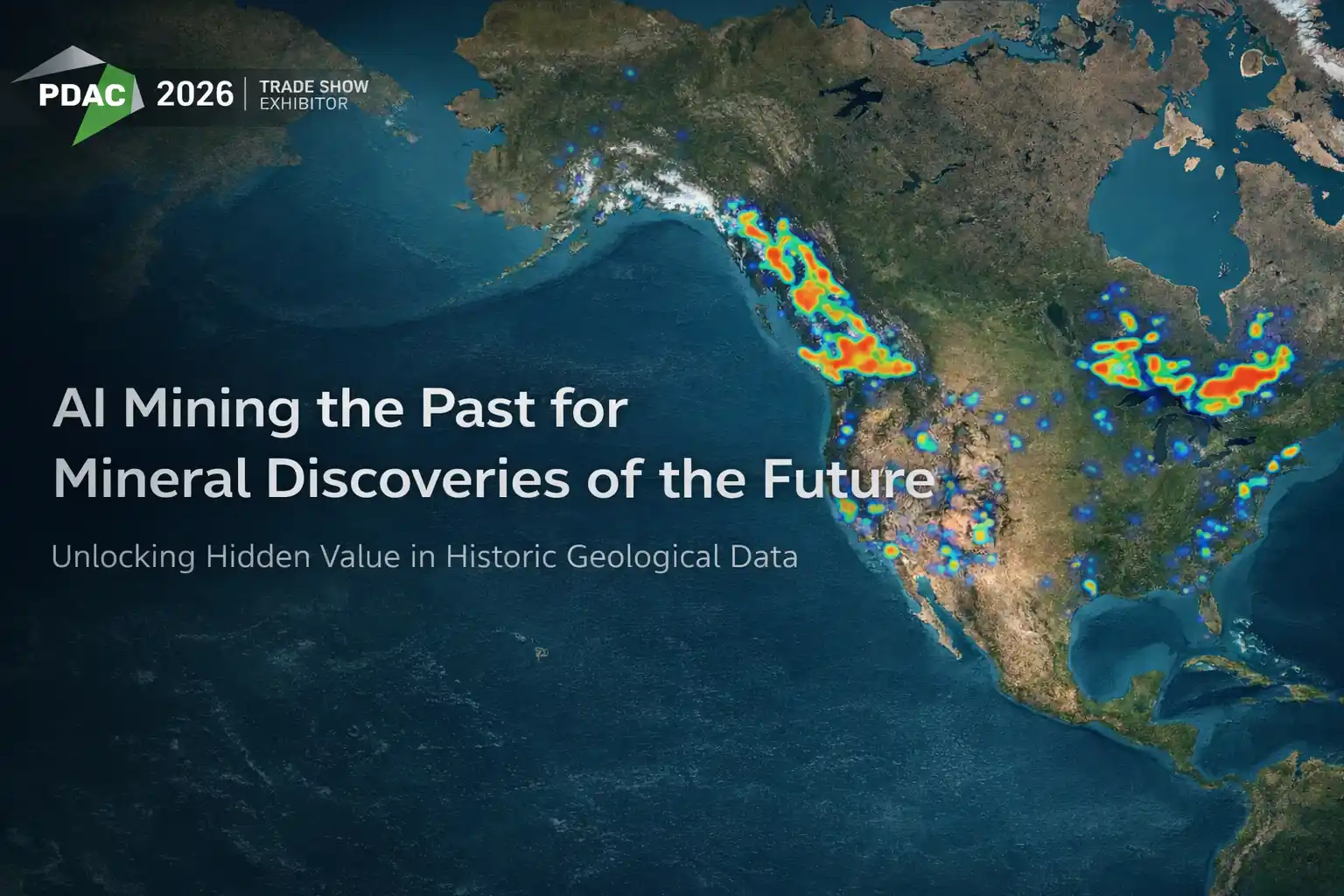
What if the next #porphyry discovery is already described in a 1980s report-just not recognized? If you're reading this, you likely saw my recent LinkedIn post and wanted to see exactly how we are reconstructing geological memory. Welcome!
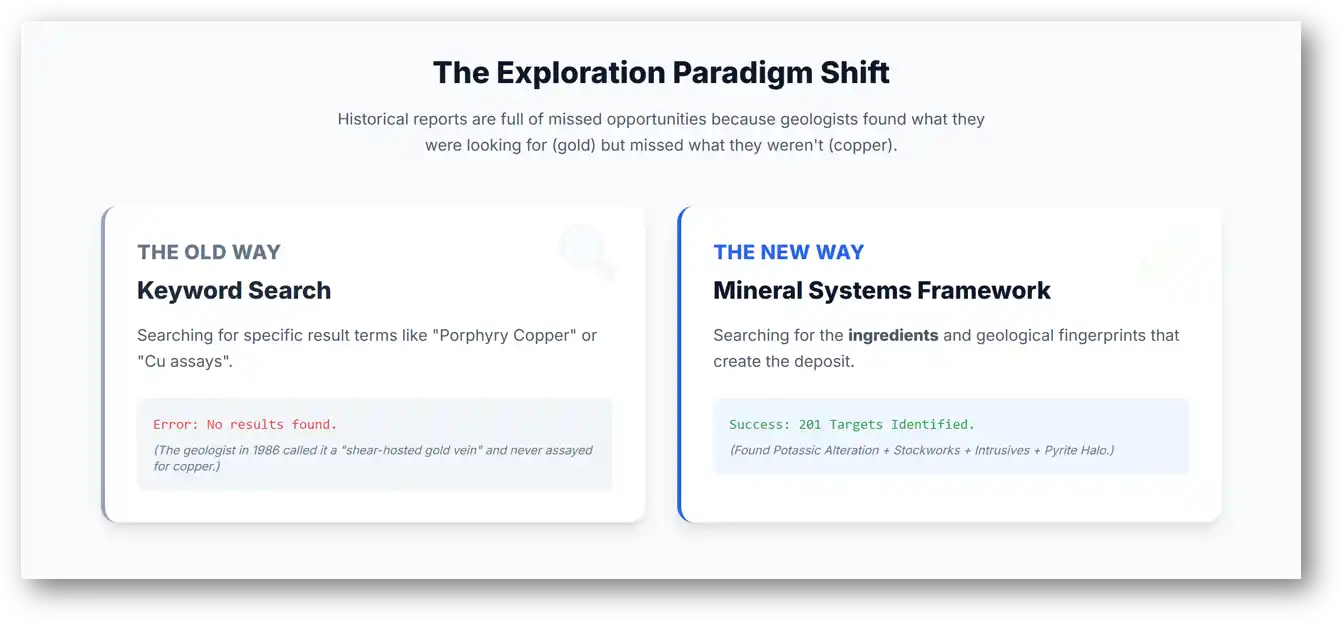
For decades, the standard approach to digging through historical reports was simple keyword searching. You want to find porphyry copper? You search for "porphyry copper" or "#copper." But what happens when the geologist who logged the core in 1986 was exclusively looking for narrow-vein gold and completely missed the larger copper system surrounding it?
You miss the deposit.
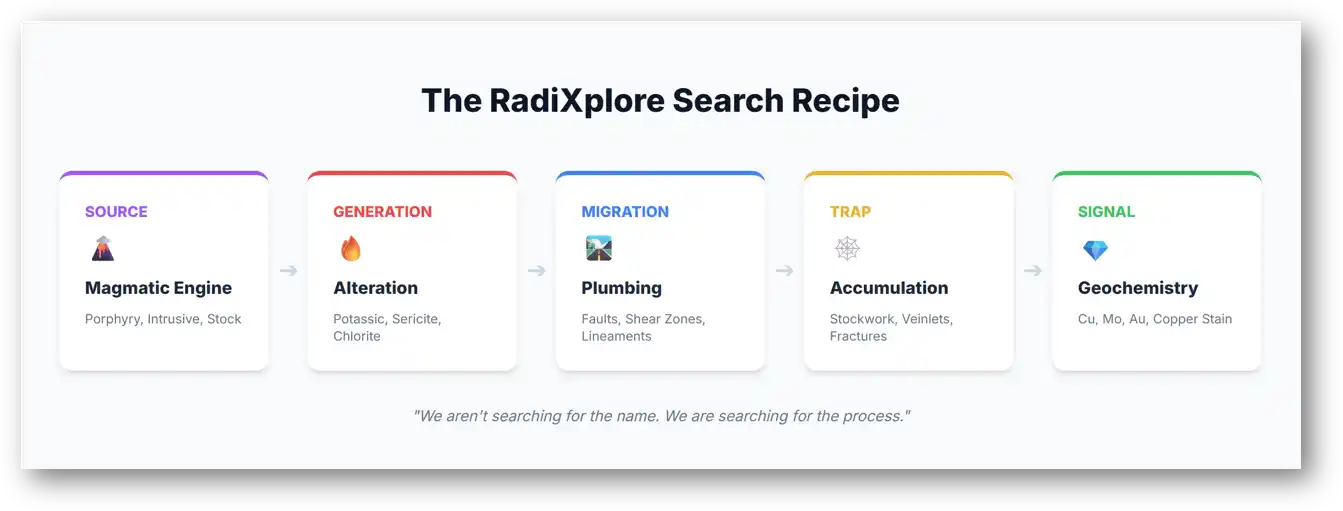
To solve this, modern explorers are adopting the Mineral Systems Framework. Instead of searching for the result (the deposit name), we search for the geological fingerprint-the source, the fluid migration pathways, the physical traps, and the chemical triggers.
As a proud recipient of the BHP Xplor program supporting mineral systems-driven discovery, we used RadiXplore V3 to prove this concept. Here is the exact case study on how we built our search string, dissected historical drill results, and identified a near-miss porphyry system hiding in plain sight in Saskatchewan.
Moving Beyond Basic Keyword Searches: Searching for "Ingredients"
Historical authors described what they saw through the lens of their era and their specific commodity focus. To find a hidden mineral system, we have to "back-translate" the modern mineral systems framework into the descriptive language of past geologists.
Here is the exact search query we engineered in RadiXplore V3 to find these systems:
🔑 Unlock the hidden geological signature
Gain access to exclusive insights that could guide your next big discovery.
👉 Get the detailsWhy We Chose This Query (The Framework Breakdown)
Instead of searching for commodity keywords, we searched for the ingredients of a porphyry system:
- Magmatic Engine (Source):
(porphyr* | intrusive | stock)- We need the deep-seated heat source that drives the system. - Hydrothermal Alteration (Generation):
(potassic | sericite | chlorite | "pyritic halo")- We are looking for the "cooked" rocks that indicate magmatic fluid release. - Accumulation Mechanisms (Trap):
(veinlet* | "disseminated" | "mineralized fractures")- This targets the physical evidence of fluid pressure shattering the rock (stockworks). - Structural Plumbing (Migration):
("major structure" | "structural control" | "deep-seated" | "lineament" | "crustal fault" | "shear zone" | "regional trend" | "suture")- Copper doesn't just appear; it travels along major crustal corridors. - Signaling Metals (Geochemistry):
(Cu | Mo | Au | "copper stain*")- The base and precious metal "smoke" that vectors toward the core.
Unleashing the Search Across 50 Million+ Pages
With our process-driven query built, we used RadiXplore to deploy it across more than 50 million pages of scanned reports, handwritten field notes, and hand-drawn maps spanning US and Canadian geological archives.
In seconds, we weren't just searching text; we were rapidly reviewing data to determine whether a "failed" project was actually a geological miss... or just a technical/economic one.
By focusing our lens on the Saskatchewan assessment archives, the RadiXplore heatmap immediately lit up.
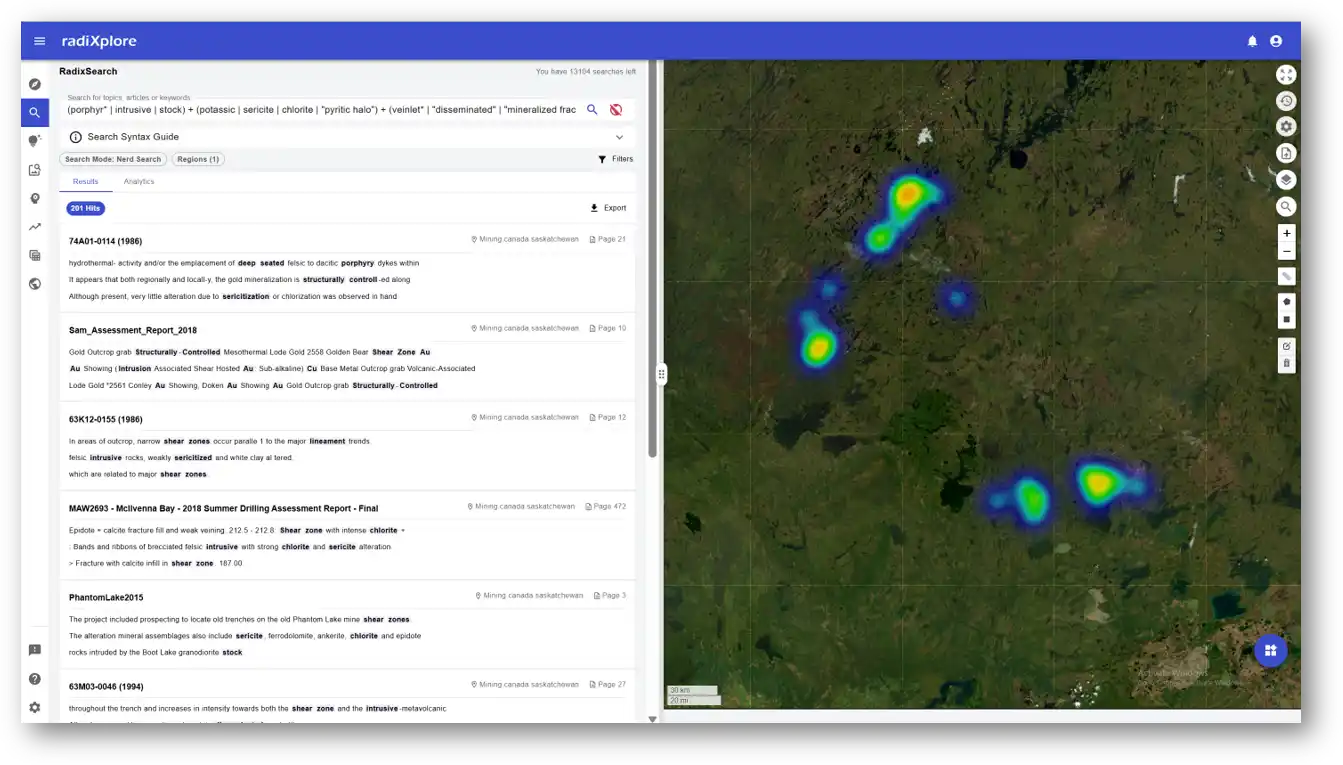
The query generated 201 potential porphyry targets in Saskatchewan alone. Let's dissect one of these results: a forgotten summary report from 1987.
Geological Analysis: Historical Project "Alpha" (Saskatchewan)
Source Document: 1987 Summary Report (Report ID & Location Redacted)
Author: Historical Explorer (Company Name Redacted)
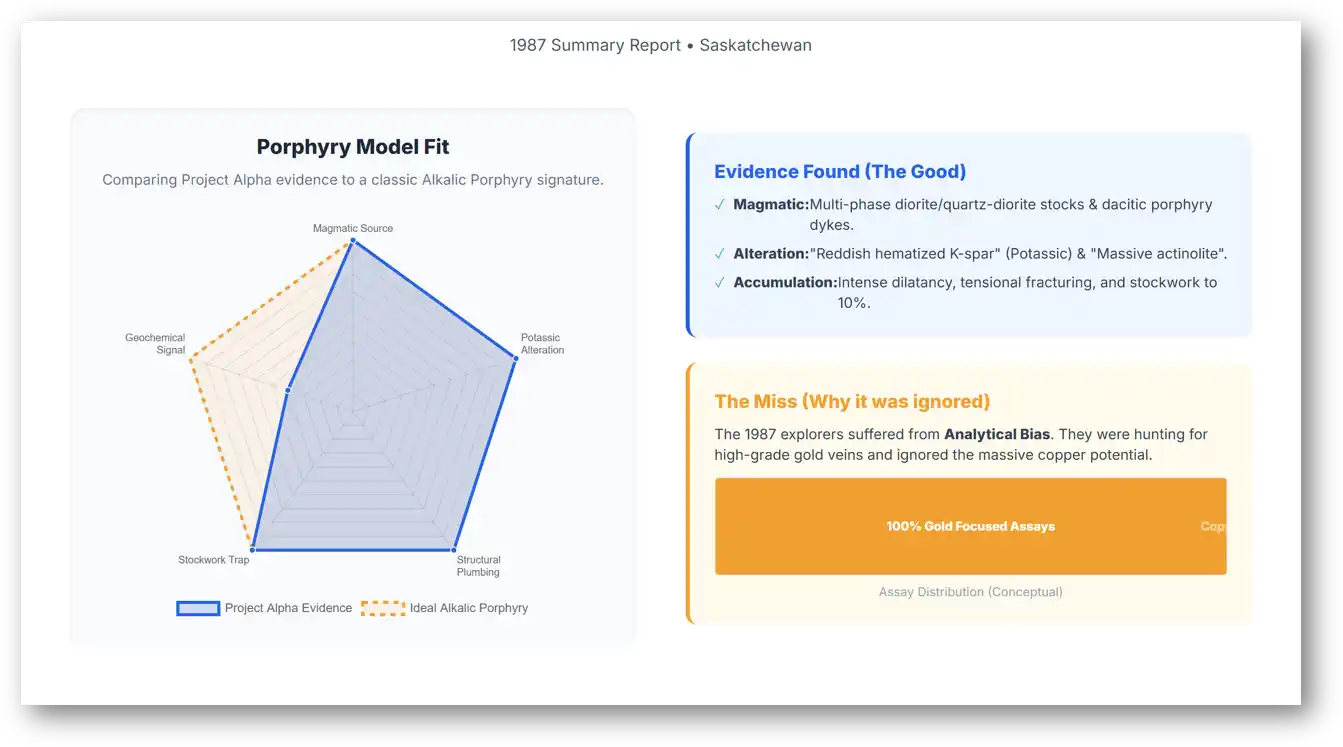
1. Evidence FOR a Porphyry Copper-Gold Model
The report contains several descriptors that align perfectly with Alkalic Porphyry systems (similar to the Mount Milligan or Galore Creek deposits in British Columbia).
A. Magmatic "Engine" (Source)
- Multi-phase Intrusives: The report describes a major regional batholith and its "border phase" of diorite and quartz-diorite stocks.
- Porphyry Dykes: The report explicitly identifies "deep seated felsic to dacitic porphyry dykes" as potential sources of mineralization.
- Structural Focus: Mineralization is centered where these dioritic stocks intersect a major regional fault zone, acting as a primary crustal structure (Migration conduit).
B. Alteration Assemblages (Separation)
- Potassic Alteration (The Red Dye): The primary alteration zone is defined by "reddish (hematized) fine grained, anhedral K-spar." This is a classic potassic core signature.
- Actinolite-Calcite: The presence of "massive actinolite replacement" and "strong calcite alteration" alongside K-spar is typical of calc-potassic alteration in gold-rich copper systems.
- The Pyrite Halo: Descriptions of "abundant pyrite" (up to 5-10% in some logs) suggests the presence of a large sulfide halo surrounding a more focused metal core.
C. Style of Mineralization (Accumulation)
- Disseminated and Stockwork: Unlike narrow-vein gold, the report highlights "low to moderate grade disseminated gold" and "micro-veining/brecciation."
- Tensional Fracturing: The "intense dilatancy and tensional fracturing" in the diorite stocks indicates a high-pressure hydrothermal fluid event that shattered the rock-a primary porphyry mechanism.
2. Evidence AGAINST / Missing Data (Gaps)
While the geological environment is nearly perfect, there are reasons the copper potential remains unproven:
- Analytical Bias (The Biggest Factor): The report focuses 100% on Gold (Au). There is virtually no mention of Copper (Cu) or Molybdenum (Mo) assay values. The samples were likely only assayed for Au and Ag.
- Narrow-Vein Mental Model: The explorers interpreted the system as "structurally controlled gold." They focused on the regional fault itself rather than testing the Diorite Stock as a bulk-tonnage target.
- Erosional Level: The presence of "hematized K-spar" and "gossans" might suggest we are at the very top of the system. In many porphyries, the copper core is deeper than the gold-pyrite cap.
3. Mineral Systems Translation
Component | Observed Evidence | Confidence |
|---|---|---|
Source | High-level Diorite/Granodiorite border phase. | High |
Migration | Major regional fault zone (crustal scale). | High |
Trigger | Tensional fracturing & pressure drop in brittle diorite. | High |
Separation | Disseminated sulfides, K-spar, and Actinolite. | Moderate (No Cu assays) |
Preservation | Deeply oxidized gossan / weathering profile. | Moderate |
4. Conclusion & Recommendation
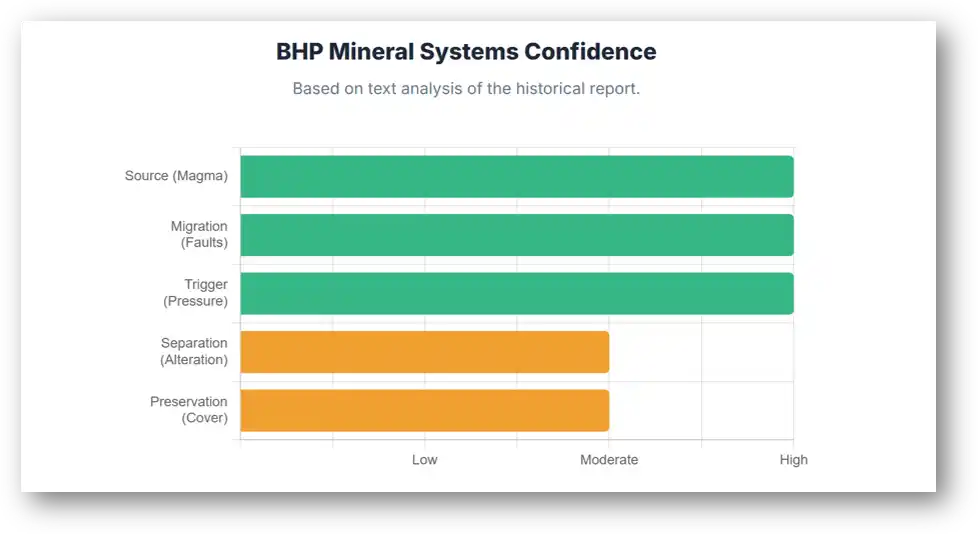
The historical "failure" of this project was entirely an economic/technical miss based on a gold-only bias, not a geological miss. The report describes a Dacite Porphyry intruding a Diorite Stock with Potassic Alteration and Disseminated Mineralization. This is the textbook "Signature" of an alkalic porphyry.
Next Steps to Validate:
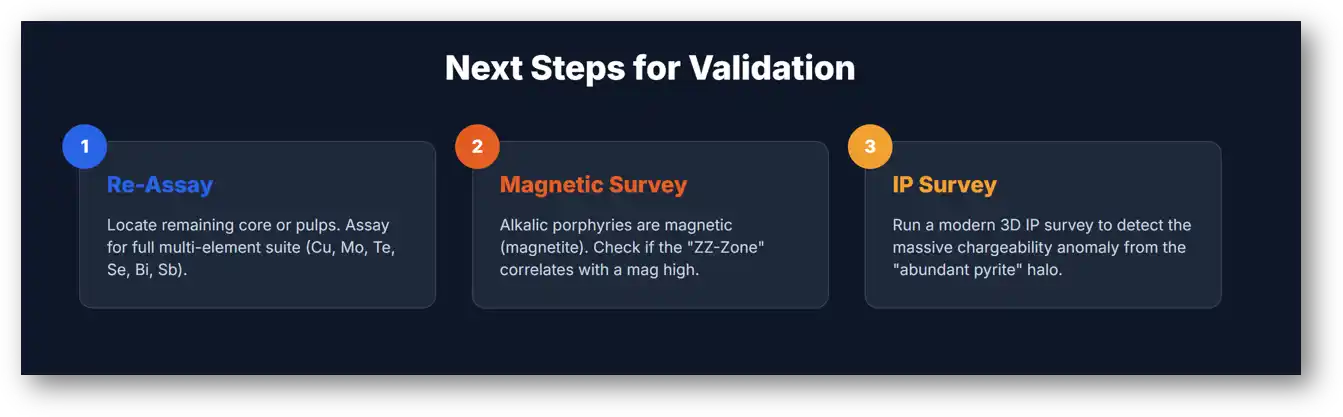
- Re-Assay: Locate any remaining core or pulps from the 1987 program and assay for a full multi-element suite (Cu, Mo, Te, Se, Bi, Sb).
- Magnetic Survey: Alkalic porphyries are often highly magnetic due to hydrothermal magnetite. Check if the primary alteration zone correlates with a magnetic high.
- Induced Polarization (IP): The "intense fracturing" and "abundant pyrite" would create a massive chargeability anomaly. A modern 3D IP survey could "see" the copper core beneath the gold-rich cap.
200 More Targets Waiting to be Validated
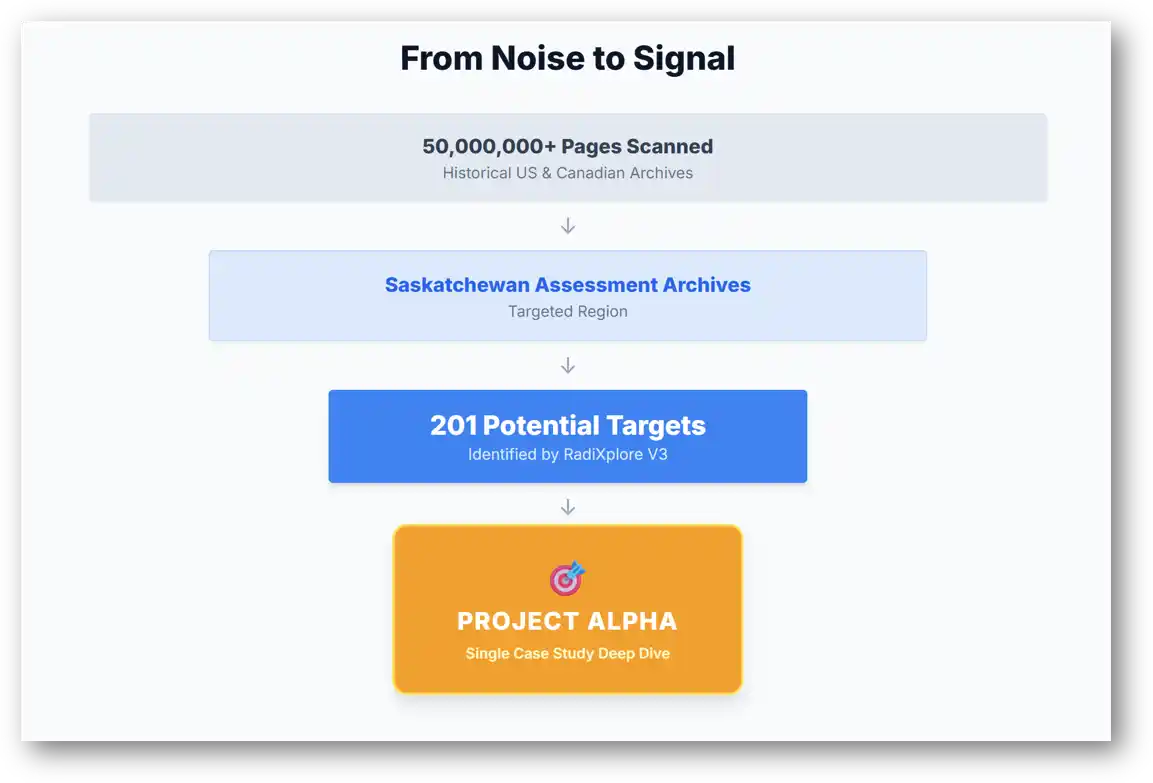
This specific project is just one of 201 results our query generated in Saskatchewan alone. That means there are roughly 200 other historical anomalies-logged by geologists decades ago-that exhibit the exact geological fingerprints of a porphyry system but have likely never been tested for one.
And this methodology isn't limited to Porphyry Copper in Saskatchewan.
By adjusting the search parameters within the Mineral Systems Framework, this exact same workflow can be used to uncover Unconformity-Related Uranium in the Athabasca Basin, Orogenic Gold in the Abitibi, or Lithium Pegmatites in Western Australia. It works globally across public archives, and it works securely on your own proprietary, in-house data.
See You at PDAC 2026!
Finding these overlooked targets manually would take an army of geologists lifetimes to read. RadiXplore V3 makes it possible in seconds, bridging the gap between historical geological jargon and modern mineral system models.
Want to see how it works live? Teryne Yong and I will be at Booth 7119N this week at the Prospectors & Developers Association of Canada (PDAC) 2026 convention demonstrating how to uncover your next major discovery using RadiXplore. Come find us!